Do You Need a Permit to Demolish a Mobile Home?
Yes, you may need a permit to demolish a mobile home. The exact requirements depend on where the property is located, so you should check with the city or county that has jurisdiction before any demolition work begins.
Permits are only one part of the process. Depending on the project, you may also need to address utility disconnections, asbestos inspection, demolition notifications, and disposal requirements before the structure can come down. In this article, we’ll walk through what to check before demolition, what can affect the process, and how to plan for removal.
Why Mobile Home Demolition Permits Depend on Location
There is no single demolition permit rule that applies everywhere. Cities and counties can set their own permit processes, inspection requirements, application steps, and utility rules. In some places, demolition has its own permit application. In others, it may be handled through the building inspections department.
For example, the Town of Apex, North Carolina, uses a specific demolition permit application and requires verification that utilities have been properly terminated before demolition. The best first step is to contact the local building inspections or permitting office and describe exactly what you plan to remove.
What Should You Check Before Demolishing a Mobile Home?
A permit is only one part of preparing for mobile home demolition.
Before work begins, confirm the local rules and the condition of the property.
1. Local demolition permit requirements
Ask the local building inspections office whether a demolition permit is required and what documents are needed.
Do not assume that an older, vacant, or damaged mobile home can simply be torn down without approval.
The local office may want details about the structure, utilities, demolition method, or site before issuing a permit.
2. Utility disconnections
A mobile home may still be connected to electricity, water, sewer, gas, or other services. Those services may need to be disconnected before demolition. Some jurisdictions also require proof or inspection before work can begin.
Some cities require verification that utilities have been properly terminated before demolition. That is why utility status should be checked early rather than on demolition day.
3. Asbestos requirements
Asbestos is one of the most important issues to check before demolishing an older structure. North Carolina’s Health and Human Services Department states that buildings must be inspected for asbestos by a North Carolina-accredited asbestos inspector before demolition or renovation begins.
The U.S. Environmental Protection Agency also warns that demolition can disturb asbestos-containing materials and release fibers into the air. If regulated asbestos-containing material is found, additional handling, removal, or notification requirements may apply.
4. State demolition notification
A local demolition permit and a state demolition notification are not the same thing. North Carolina requires demolition notification to the Health Hazards Control Unit even when asbestos is not found. The agency says you must submit this notification at least 10 working days before demolition begins.
This can affect your timeline, so it should be checked before you choose a demolition date.
Mobile Home Demolition Permit Checklist
Before demolishing a mobile home, work through these questions:
What to check | Why it matters |
Who has permitting authority? | The city or county can tell you which local rules apply. |
Is a demolition permit required? | Some jurisdictions use a dedicated demolition permit. |
Are utilities still connected? | Services may need to be shut off and verified first. |
Has the structure been checked for asbestos? | North Carolina has specific asbestos inspection requirements for demolition. |
Has any required state notification been submitted? | Local permitting does not replace state demolition notification. |
Are there other site conditions? | Wells, septic systems, nearby structures, or access issues can affect the project. |
One common mistake is treating all of these as a single permit issue. In reality, several different offices or steps may be involved.

What Can Delay Mobile Home Demolition?
Missing paperwork is only one thing that can slow a project down. Delays can also happen when utilities are still connected, asbestos inspection has not been completed, access is limited, or the site contains other structures or materials that were not included in the original plan.
It helps to identify these issues before scheduling equipment or labor. For example, an attached deck, shed, porch, abandoned vehicle, or large amount of household debris can change the scope of the job.

Is Mobile Home Removal the Same as Demolition?
Not always.
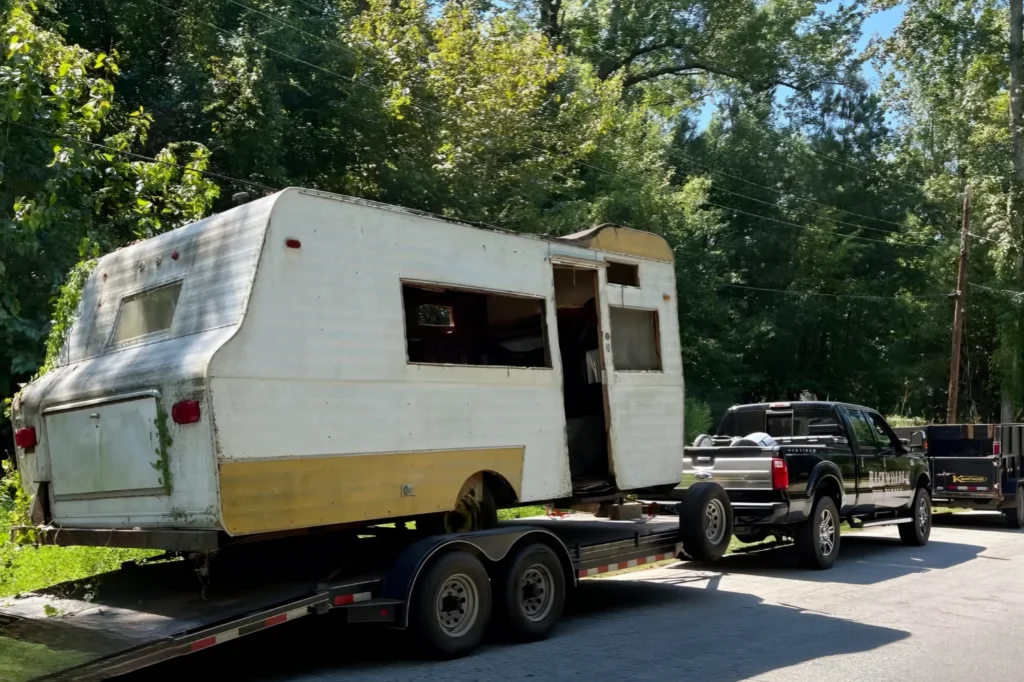
A mobile or manufactured home that can be moved intact is different from one that will be dismantled and hauled away. The permit process may also differ depending on what is actually happening to the structure.
The same applies to camper van demolition. A camper, travel trailer, and mobile home should not automatically be treated as the same type of project.
When speaking with the permitting office, explain:
- What type of structure is on the property
- Whether it is permanently installed
- Whether it will be moved or demolished
- Whether utilities are still connected
- Whether decks, sheds, or other structures are attached
Clear information helps the local office tell you what rules apply.
Can You Demolish a Mobile Home Yourself?
The bigger question is not only whether you have the tools to tear it apart. You also need to consider permits, utilities, hazardous materials, hauling, disposal, equipment access, and the amount of debris the demolition will create.
Demolition can also expose materials that should not be disturbed without proper evaluation. North Carolina warns that asbestos-containing materials can release fibers when they are damaged, cut, crushed, or disturbed.
If you do not know what a material is, avoid breaking it apart until you know whether special handling is required.
How Should You Plan for the Debris?
Demolishing a mobile home creates much more debris than a typical household cleanout. The project can involve metal, wood, fixtures, appliances, flooring, furniture, and other materials that must be loaded and transported.
If the property also has unwanted vehicles, structures, or other large items, identify them before planning the job. Camper removal, for example, may need to be considered separately from the demolition itself depending on the condition of the camper and the property.
Planning should account for:
- How equipment will reach the structure
- Where debris will be staged
- How much material is likely to be removed
- Whether other items on the property also need removal
- Whether anything requires special handling
- Where the debris can legally be taken
The demolition itself may be only one part of the job. Loading, hauling, and clearing the site can take significant planning as well.
What About Mobile Home Demolition in Fuquay-Varina, NC?
If the property is in Fuquay-Varina, NC, confirm the current demolition requirements with the town before work begins. Local rules can change, and the permitting office can tell you which applications, inspections, utility steps, and supporting documents apply to your specific property.
You should also confirm any North Carolina asbestos inspection and demolition notification requirements separately from the local permit process.
Get the Right Plan Before Demolition Starts
A mobile home demolition project is easier to manage when permits, utilities, site conditions, and removal needs are clear before work begins. Sorting out those details early can help prevent delays and make the job easier to plan.
Backwoods Junk Removal can help with the removal side of the project, including mobile homes, campers, travel trailers, boats, old machinery, and larger property cleanouts. If you are not sure what needs to happen next, reach out to talk through the property, what needs to go, and the best way to move forward.
Frequently Asked Questions
Do you need a permit to demolish a mobile home in Fuquay-Varina, NC?
You should check with the local permitting authority before demolition begins. Permit requirements can depend on the property, structure, utilities, and work being performed.
North Carolina also has separate asbestos inspection and demolition notification requirements that may apply even when the local permit process has already been completed.
What information should I have ready when I call about mobile home removal?
Having a few details ready can make the conversation much easier.
Try to know:
- The property address
- Whether the structure is a mobile home, camper, or travel trailer
- Whether utilities are still connected
- Whether decks, sheds, or other structures are attached
- Whether there is household junk or other material that also needs to go
- Whether the structure will be demolished or moved intact
If you are not sure how to describe the project, call us so we can help sort out what needs to be evaluated before we schedule the work.
Can you remove a camper or travel trailer from a property?
Yes. Camper and travel trailer removal can be part of a larger property cleanout. We can also remove mobile homes, boats, cars, and old machinery depending on the project.
The exact removal method will depend on the condition of the structure, access to the property, and any local requirements that apply.
What happens if asbestos is found before demolition?
Do not disturb it until you know which rules apply. North Carolina requires accredited professionals for regulated asbestos inspection and certain asbestos work. Additional removal and notification requirements may apply when regulated asbestos-containing material is present.
This is one reason asbestos inspection should happen before demolition begins rather than after materials have already been broken apart.
Can other junk and structures be removed during the same property cleanout?
Potentially, yes. We can remove items and structures such as campers, travel trailers, boats, old machinery, sheds, decks, furniture, household waste, and other materials.
The best approach is to identify everything that needs to go before the job is planned. That makes it easier to account for equipment, labor, hauling space, and any materials that need special handling.